

The journal / Pune
Today's Site Spotlight: Slab Casting with Workers — H&H SPACES Pune
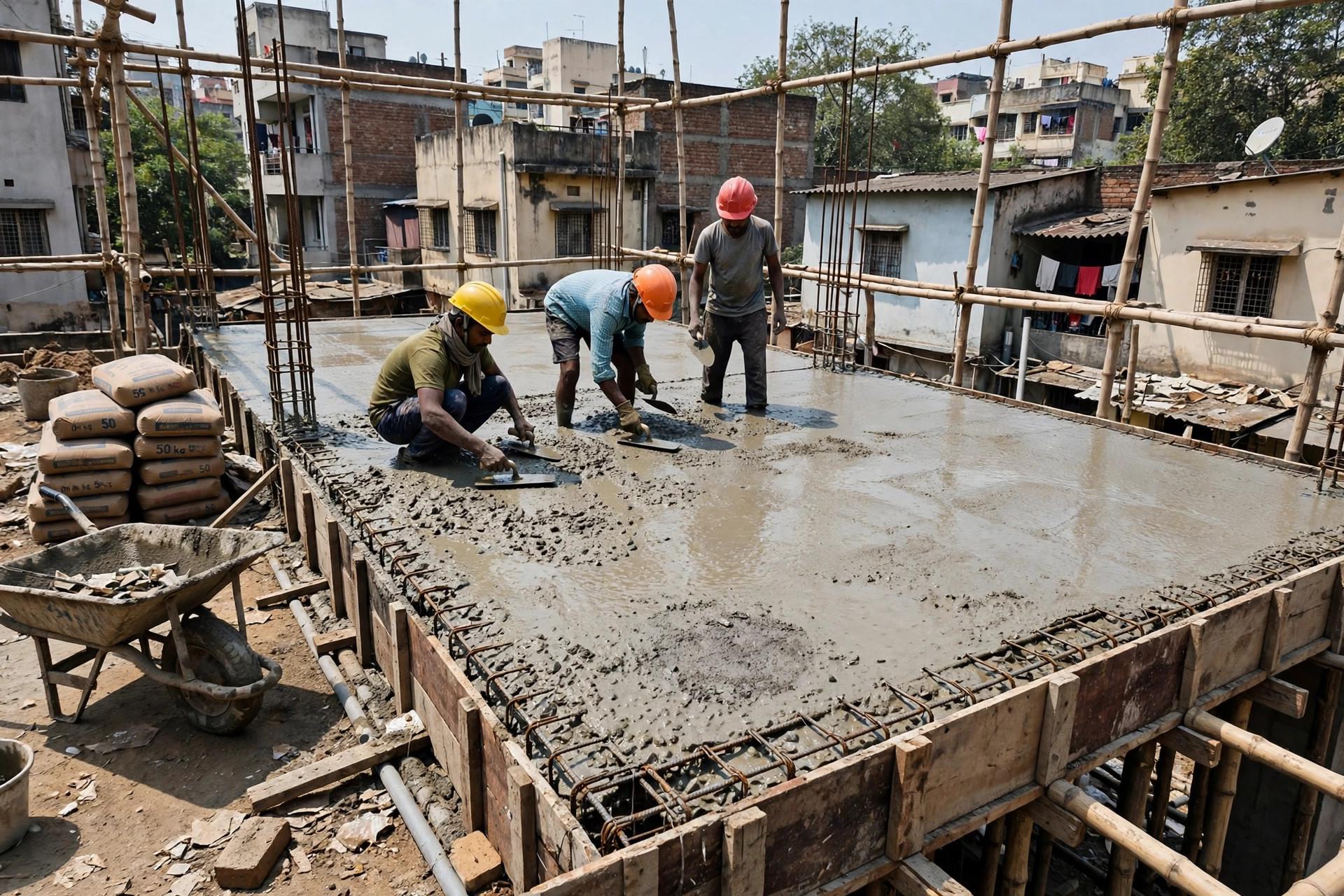
The day the concrete goes in: a freshly poured slab, workers trowelling the surface, rebar mesh, timber shuttering and cement bags around them. What a well-run slab casting day looks like on a Pune site, and why the hours during and after the pour decide the slab's strength for decades.
Written by H&H SPACES — a Pune-based construction and civil contracting company serving Pune and PCMC.
 Illustrative image
Last updated: 2026-10-24
Why Slab Casting Day Matters Most
Of all the days on a residential build, slab casting day is the one you cannot redo. Once concrete is poured and sets, it is there for the life of the house — there is no going back to fix a honeycombed corner or a poorly finished surface cheaply. That is why experienced builders treat the pour as a planned operation, not just another day's work: materials staged in advance, the crew briefed, and every hand knowing its station before the first batch of concrete arrives.
What the Crew Is Actually Doing
Look at a slab casting photo and you will see workers with trowels moving across wet concrete, levelling and finishing the surface. Behind that simple motion is a rhythm the crew builds over years: the concrete has to be spread before it stiffens, the surface struck to level while it is workable, and the finish floated at just the right moment — too early and it sinks, too late and it tears. The wheelbarrows and stacked cement bags are part of the choreography; a pause in supply on casting day shows up in the slab as a weak cold joint.
Shuttering and Rebar: The Invisible Structure
What the finished slab hides is the work that went in before the pour: the rebar mesh tied and spaced to the drawing, the timber shuttering set dead level to carry tonnes of wet concrete without bulging, and the bamboo scaffolding that holds it all up from below. If the shuttering gives even a little under the load, the slab cures with a permanent sag. Checking levels and props before the concrete arrives is the unglamorous step that separates a sound slab from a future problem.
After the Pour: Curing Is the Real Work
Pouring is only half the job. Concrete gains its strength over days of curing — kept damp so the chemical reaction completes instead of drying out and cracking. In Pune's dry months especially, curing is where slabs quietly fail: a slab left to dry in the sun loses strength at the surface and develops fine cracks that haunt the ceiling below for years. Ponding water or regular wetting of the fresh slab for the first week is cheap insurance against that.
From Our Site Diary Today
Today on our site: a freshly poured slab, helmeted workers trowelling the surface, rebar mesh at the edges, timber shuttering and bamboo props below, cement bags and wheelbarrows in steady rotation. A well-poured, well-cured slab is the quietest part of your home for decades — you never think about it, and that is the point. If you are building your own home in Pune and want the structure under your feet done right, reach H&H SPACES — call +91 84840 57448 or WhatsApp +91 84850 54612 and we will walk you through how we build.